

Affiliate marketing has become one of the most effective ways to make money online without creating your own products or managing inventory.

Whether you live in the USA, Pakistan, or anywhere in the world, understanding How Affiliate Marketing Works Step by Step in 2026 can help you build a successful online business from scratch. By joining trusted affiliate programs, creating valuable content, and driving targeted visitors to your website, you can earn commissions whenever someone purchases through your recommendation. With AI tools making research and content creation easier than ever, beginners now have a better opportunity to build sustainable passive income while helping people discover products and services that genuinely solve their problems.
If you’re exploring different online income opportunities, you should also read our guide on the highest-paying freelance skills in Pakistan before choosing your long-term career path.
What Is Affiliate Marketing?
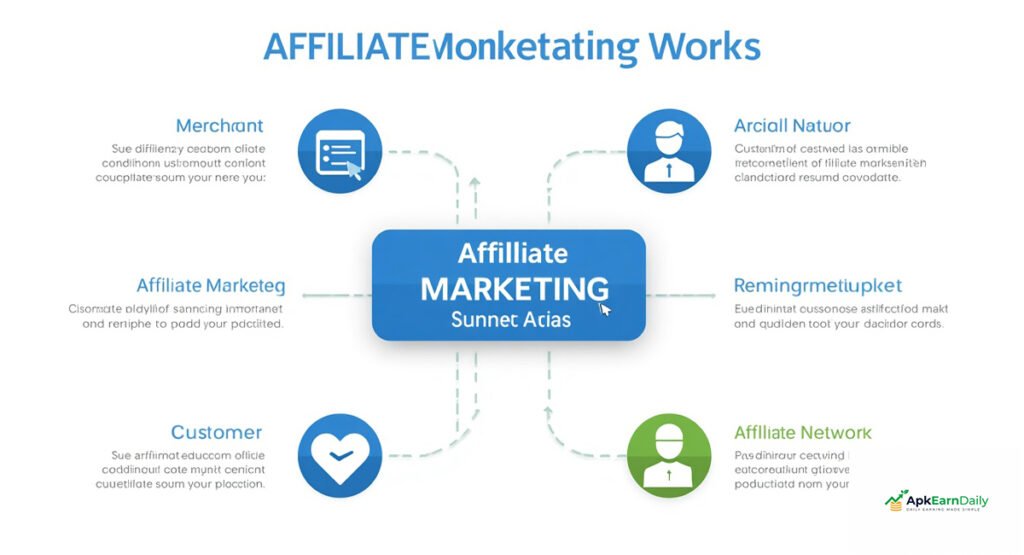
Affiliate marketing is a performance-based marketing system where a company rewards people for bringing new customers. You recommend a product or service through unique affiliate links, and when someone buys through your link, you receive an affiliate commission. This system has become one of the fastest-growing forms of commission-based marketing because everyone benefits. The company gains customers, the buyer finds a helpful solution, and the affiliate earns a reward. Today, thousands of businesses offer affiliate programs covering physical products, digital products, and service products, making it easier than ever to start.
You can think of affiliate marketing as being a trusted bridge between a company and a customer. Imagine recommending your favorite laptop to a friend. If the store paid you for that recommendation, you would already understand how affiliate marketing works. Success depends on creating helpful content instead of pushing sales. That is why experienced marketers focus on content marketing, blogging for affiliate marketing, and solving real problems. When readers trust your advice, they naturally become loyal visitors and potential buyers.
Affiliate Marketing Explained in Simple Words
Affiliate marketing means promoting another company’s products while earning a commission for every successful sale or action. You never need to manufacture products, manage shipping, or provide customer support. Those responsibilities belong to the company. Your main job is attracting the right audience and helping people make better buying decisions through informative content.
For example, imagine you write a detailed review about an AI writing tool. Someone searches Google, reads your article, clicks your affiliate link, and purchases the software. The company tracks that purchase through your unique link and sends you a commission. This simple process allows thousands of bloggers and creators to build reliable passive income over time.
The Four Main Parts of Affiliate Marketing
Every affiliate marketing system follows the same basic structure. Four participants work together to complete the process successfully.
| Participant | Role |
| Merchant | Owns the product or service being promoted |
| Affiliate marketer | Promotes products and earns commissions |
| Customer | Purchases through the affiliate link |
| Affiliate networks | Connects companies with affiliates and manages tracking |
The merchant creates products and manages customer service. The affiliate marketer, sometimes called the publisher, attracts visitors by publishing useful articles, videos, or tutorials. The customer, also known as the consumer, buys after reading or watching the recommendation. Many companies also work through affiliate networks, which provide reporting tools, payments, and performance tracking.
Quote: “People rarely buy because someone sells. They buy because someone helps.”
How Affiliate Marketing Works Behind the Scenes
Many beginners believe affiliate marketing is complicated. In reality, the technology does most of the work. Every affiliate receives a unique affiliate tracking link. This link contains a special tracking code that identifies which affiliate referred the visitor. When someone clicks it, an affiliate cookie is stored in the visitor’s browser for a specific period.
If the customer completes a purchase before the cookie expires, the sale is credited to your affiliate account. The company records everything inside your affiliate dashboard, including clicks, sales, and commission payment details. Modern tracking systems have become extremely accurate, allowing affiliates to monitor performance almost instantly.
How Does Affiliate Marketing Work? (Step-by-Step Process)
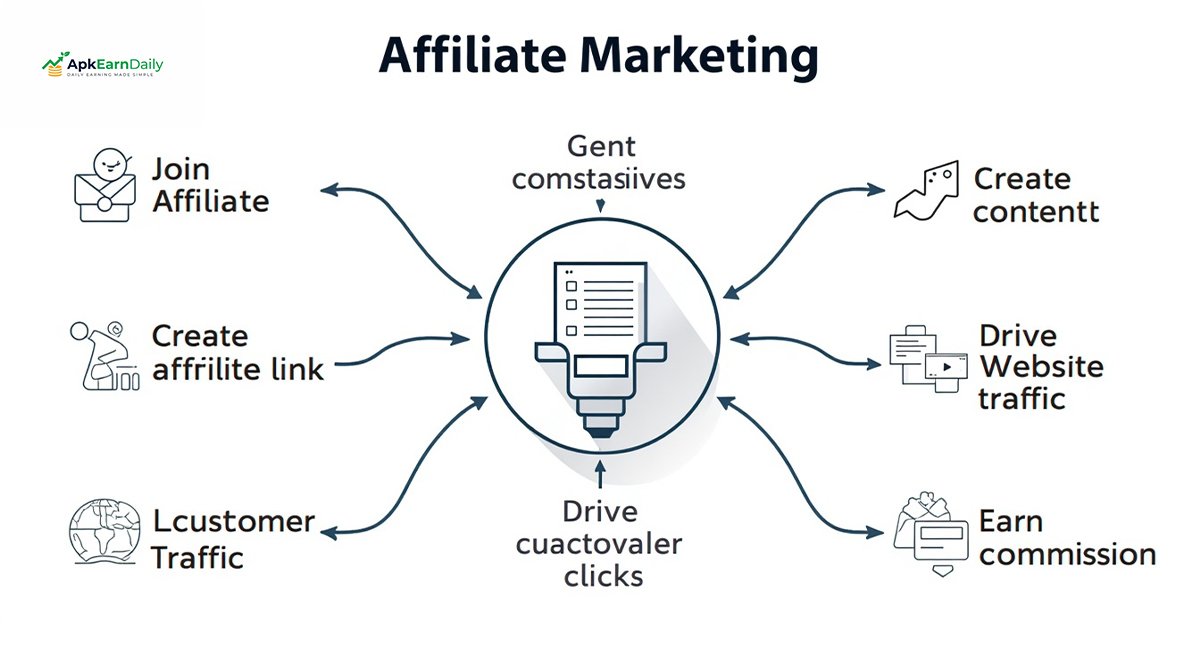
Learning How Affiliate Marketing Works Step by Step in 2026 becomes much easier when you see the complete journey from start to finish. Every successful affiliate follows the same basic roadmap. Although experienced marketers use advanced strategies, the core process has remained surprisingly simple. The real difference comes from creating value before expecting sales. People trust recommendations from creators who educate first and promote second.
Think of affiliate marketing like planting a tree. You prepare the soil by selecting the right niche. Then you create quality content, attract visitors, and patiently nurture your audience. Eventually, your efforts grow into consistent affiliate income. Unlike many online opportunities promising instant riches, affiliate marketing rewards patience, learning, and steady improvement.
Step 1: Join an Affiliate Program
The journey starts by joining one or more affiliate programs related to your niche. Thousands of companies welcome beginners because they only pay after successful sales. This means businesses face very little financial risk while affiliates gain an opportunity to build income without inventory or product development.
Before joining any program, consider the product quality, commission rates, cookie duration, and reputation. A trustworthy company usually offers a transparent commission structure, a reliable commission percentage, and helpful resources for affiliates. Choosing reputable brands also strengthens user trust, which often leads to better long-term results.
Step 2: Receive Your Affiliate Link
Once approved, you receive a unique referral link assigned specifically to your account. This affiliate tracking link identifies every visitor you send to the company. Modern systems automatically track clicks, purchases, and commissions without requiring manual work.
Inside your affiliate dashboard, you can usually generate links for different products, monitor performance, and review detailed reports. These insights help you understand which products attract the most interest and which pages generate the highest conversions.
Step 3: Create Helpful Content
Content is the engine that drives affiliate marketing. Instead of constantly advertising products, successful affiliates focus on educating readers. This approach naturally increases audience trust, improves search engine optimization, and attracts more organic traffic over time.
Popular content formats include detailed product reviews, informative comparison articles, practical tutorial content, complete buying guide articles, and resource collections on a dedicated resource page. Each format answers specific questions while helping readers solve real problems before making a purchase.
Step 4: Bring Visitors to Your Content
Publishing content alone does not guarantee success. People must actually find your website or videos. This is where search engine optimization, keyword research, digital marketing, YouTube affiliate marketing, social media marketing, and email marketing become essential.
Google remains one of the most valuable traffic sources because visitors often search with strong buying intent. Someone searching “best AI writing tool” already wants a solution. By creating useful articles targeting these searches, you attract highly qualified website visitors who are more likely to convert.
Step 5: Visitors Click Your Affiliate Link
When readers trust your recommendation, they naturally click your affiliate link to learn more. This moment depends heavily on conversion optimization, clear explanations, and an effective call to action. Aggressive selling usually pushes people away. Helpful advice encourages curiosity and builds confidence.
For example, instead of saying “Buy this product now,” a better approach is explaining why the product solves a specific problem. Readers appreciate honesty because it helps them make informed decisions.
Step 6: Customer Makes a Purchase
After clicking your link, the visitor arrives on the company’s website. The business handles payment processing, product delivery, refunds, and customer support. You simply focus on creating valuable content that attracts qualified traffic.
Many affiliate programs offer both one-time commissions and recurring commissions. Software companies frequently reward affiliates every month while the customer keeps an active subscription. These recurring payments can gradually build predictable monthly revenue.
Step 7: Receive Your Commission
Once the purchase is verified, your earnings appear inside your affiliate dashboard. Most companies release commission payments after a verification period to account for refunds or cancellations. Payments commonly arrive through PayPal, Wise, direct bank transfer, or other international payment services.
Over time, consistent publishing creates multiple income sources. One article may generate commissions every month without additional work. As your library of content grows, your overall website monetization strategy becomes stronger and more sustainable.
Affiliate Marketing Workflow
| Step | Action | Result |
| 1 | Join affiliate program | Receive approval |
| 2 | Get unique affiliate link | Sales become trackable |
| 3 | Publish quality content | Build audience trust |
| 4 | Attract website traffic | Increase potential buyers |
| 5 | Reader clicks your link | Visitor reaches merchant |
| 6 | Customer purchases | Sale gets recorded |
| 7 | Earn commission | Receive affiliate income |
Simple Affiliate Marketing Diagram
Merchant
│
▼
Affiliate Program
│
▼
Affiliate Link
│
▼
Blog / Website / YouTube
│
▼
Visitor Clicks
│
▼
Customer Purchase
│
▼
Affiliate Commission
Real-World Example
Imagine Sarah starts a small AI tools blog. She joins an affiliate program for an AI writing software. She writes a detailed review, publishes comparison articles, and shares tutorial content optimized for Google search. Within a few months, her article ranks well and attracts steady organic traffic. Every time a reader purchases the software through her affiliate link, she earns a commission. She doesn’t own the software, process payments, or provide customer support. Her job is simply helping readers choose the right solution.
This example shows why How Affiliate Marketing Works Step by Step in 2026 is easier to understand than many beginners expect. Focus on helping people first, build trust consistently, and let quality content work for you over time. In the next section, you’ll discover the different types of affiliate marketing and learn which approach fits beginners best.
Types of Affiliate Marketing
Affiliate marketing isn’t the same for everyone. Some people promote products they have never used, while others recommend only tools they trust. Understanding these models helps you choose a strategy that matches your goals. In 2026, successful affiliates focus on honesty because user trust matters more than ever. Search engines also reward websites that provide real experience and helpful content instead of thin promotional pages.
Choosing the right type of affiliate marketing also affects your conversion rate and long-term affiliate income. A beginner can technically start with any model, yet building genuine credibility usually delivers better results. If readers believe your recommendations come from experience, they are much more likely to click your affiliate links and complete a purchase.
Unattached Affiliate Marketing
Unattached affiliate marketing means promoting products without having personal experience with them. The affiliate marketer relies mainly on advertisements, search traffic, or social media campaigns rather than firsthand knowledge. This approach can work, although building audience trust becomes much harder because readers often expect authentic opinions.
Many paid advertising campaigns follow this model. The affiliate partner focuses on generating clicks instead of creating deep educational content. While some marketers earn money this way, beginners usually struggle because they compete against experienced advertisers with larger budgets.
Related Affiliate Marketing
Related affiliate marketing sits between promotion and personal experience. Here, the content creator works in a specific niche and recommends products closely connected to that niche. Even if they haven’t personally tested every product, they understand the industry and know what their target audience needs.
For example, a technology blogger may recommend AI software after researching its features and customer feedback. This strategy often performs well because the recommendations still match the interests of the niche audience. Readers appreciate relevant suggestions that solve their problems.
Involved Affiliate Marketing
Involved affiliate marketing is widely considered the strongest long-term strategy. The affiliate personally uses the product before recommending it. This allows them to publish detailed review article content, honest product comparison guides, and practical tutorial guide articles based on real experience.
Imagine you use an AI image generator every day. You can explain its strengths, weaknesses, pricing, and best features with confidence. Readers notice that authenticity immediately. As a result, your recommendations influence their purchase decision far more effectively than generic promotional content.
Comparison of Affiliate Marketing Types
| Type | Experience Required | Trust Level | Difficulty | Best For |
| Unattached | No | Low | Medium | Paid advertising |
| Related | Some industry knowledge | Medium | Easy | Bloggers and creators |
| Involved | Personal experience | High | Medium | Long-term blogging and YouTube |
Fact: Research consistently shows that authentic recommendations convert better because people buy from creators they trust rather than from aggressive advertisers.
How to Start Affiliate Marketing for Beginners

Starting affiliate marketing may seem overwhelming at first. However, the process becomes much easier when you follow one step at a time. Thousands of beginners fail because they rush into promoting random products without understanding their audience. Instead, focus on building a helpful website or content platform that solves real problems. A strong foundation creates steady online income instead of temporary success.
One of the biggest advantages in 2026 is the availability of AI tools. They can speed up keyword research, outline articles, improve writing quality, and even generate ideas for videos or images. AI cannot replace your experience or creativity, yet it can save hours of repetitive work so you can focus on helping readers.
Choose a Profitable Niche
Every successful affiliate starts with smart niche selection. Your niche determines the products you promote, the people you attract, and the content you create. Instead of choosing a topic only because it seems profitable, select something that combines personal interest with market demand.
Popular affiliate niches include technology, finance, education, AI software, health, fitness, travel, web hosting, productivity, and business tools. These industries continue growing because people actively search for solutions every day. Strong search demand usually means better opportunities for affiliate sales and website monetization.
Build Your Platform
Your platform is the place where people discover your content. Most successful affiliates build a niche website because it gives complete control over branding, SEO, and long-term growth. Others combine blogging with YouTube, email newsletters, or social media to reach a wider audience.
A professional website also increases credibility. Visitors feel more comfortable following recommendations when they see organized content, useful guides, and clear contact information. This extra confidence often improves your overall conversion optimization.
Create Helpful Content
Content remains the heart of affiliate marketing. Instead of publishing advertisements, create articles that answer questions and solve problems. Educational content naturally builds authority while encouraging readers to explore recommended products.
The highest-performing formats include product reviews, comparison articles, tutorial content, complete buying guides, case studies, and resource pages. These content types usually attract readers with strong search intent, making them more likely to convert into customers.
Join Trusted Affiliate Programs
After choosing your niche, apply to reputable affiliate programs. Reliable companies provide detailed reports, marketing materials, and fair commission policies. Avoid programs that promise unrealistic earnings or hide important payment information.
Some of the world’s most respected affiliate platforms work through established affiliate networks, while others operate their own independent systems. Always review cookie duration, payout methods, commission rates, and product quality before joining.
Publish Consistently
Affiliate marketing rewards consistency more than speed. Publishing one excellent article every week usually produces better results than publishing ten low-quality articles in a single month. Each article becomes another opportunity to attract website traffic from search engines.
As your content library grows, Google begins recognizing your expertise. More pages often lead to more organic traffic, stronger authority, and increasing opportunities for monetization.
Beginner Roadmap
| Step | Goal | Expected Outcome |
| Choose a niche | Focus your website | Better audience targeting |
| Build a website | Create your online presence | Long-term growth |
| Join affiliate programs | Access products | Start earning commissions |
| Publish quality content | Help readers | Build trust |
| Learn SEO | Increase visibility | More organic traffic |
| Analyze performance | Improve results | Higher conversion rate |
Mini Case Study
David launched a small technology blog in early 2025. Instead of promoting hundreds of products, he focused only on AI software. He wrote detailed tutorials, honest reviews, and comparison guides. During his first six months, traffic remained low. He continued publishing consistently and updating older articles. By the end of the year, Google rewarded his helpful content with higher rankings. His monthly affiliate earnings eventually exceeded the income from his previous freelance projects. His success came from patience rather than shortcuts.
Best Affiliate Programs for Beginners in 2026
Choosing the right affiliate program can significantly influence your success. A beginner should focus on companies with excellent reputations, quality products, reliable payments, and fair commission policies. Promoting products you genuinely believe in also strengthens user trust, making your recommendations feel natural instead of promotional.
Many newcomers make the mistake of joining dozens of programs immediately. A smarter approach is choosing a few high-quality offers that fit your niche perfectly. As your experience grows, you can expand your portfolio without confusing your audience.
Software Affiliate Programs
Software remains one of the most profitable affiliate categories because many companies offer recurring commissions. Every month a customer renews their subscription, the affiliate continues earning. This recurring model creates stable long-term income while requiring no additional effort after the initial referral.
AI writing tools, SEO software, graphic design platforms, email marketing services, web hosting companies, and project management applications continue offering attractive commission opportunities in 2026.
Digital Product Affiliate Programs
Digital products usually provide higher profit margins than physical goods because there are no manufacturing or shipping costs. Online courses, templates, premium software, ebooks, stock graphics, and productivity tools often pay generous commissions.
Digital products also reach customers worldwide instantly. Whether someone lives in New York, Lahore, London, or Sydney, delivery happens within seconds after payment.
Physical Product Affiliate Programs
Many beginners start by promoting physical products because people already purchase them every day. Electronics, office equipment, kitchen appliances, fitness gear, books, and home accessories all provide excellent opportunities for affiliate marketing.
Although commissions are sometimes smaller than software products, high purchase volume often compensates for lower percentages.
Service Product Affiliate Programs
Many companies now pay affiliates for recommending service products such as web hosting, VPN services, online banking, website builders, freelancing platforms, insurance providers, and business software.
Service businesses frequently value loyal customers more than one-time buyers. For this reason, many offer competitive commissions and attractive performance bonuses.
Best Affiliate Programs Comparison
| Affiliate Program Type | Typical Commission | Best For | Income Potential |
| AI Software | Recurring monthly | Technology blogs | Very High |
| Web Hosting | High one-time payment | Blogging niche | High |
| Online Courses | Percentage per sale | Education websites | High |
| E-commerce Products | Percentage of order | Review blogs | Medium |
| VPN Services | Recurring or fixed | Tech websites | High |
| Business Software | Recurring commission | B2B content | Very High |
Remember: The highest commission doesn’t always produce the highest earnings. A trusted product with excellent customer satisfaction usually converts better than an expensive product that few people want.
At this stage, you understand the foundation of affiliate marketing. You know the different business models, how beginners should get started, and which affiliate programs offer strong opportunities. In the next part, you’ll discover how artificial intelligence can dramatically improve your workflow, save countless hours, and help you build a more successful affiliate business in 2026.
How AI Can Help You Succeed in Affiliate Marketing

Artificial intelligence has transformed affiliate marketing faster than almost any other online industry. In 2026, AI is no longer a luxury. It has become a practical assistant that helps affiliates research topics, write faster, improve SEO, analyze data, and create better marketing campaigns. The most successful affiliates don’t let AI replace their knowledge. Instead, they use it to complete repetitive tasks while spending more time building user trust and creating valuable experiences.
If you are just starting, AI can shorten your learning curve dramatically. Instead of spending several hours researching a single topic, you can organize ideas within minutes. However, every article should still include your own insights, examples, and opinions. Search engines reward originality because readers want genuine expertise rather than copied information.
If you’re looking for free resources, explore our list of the best free AI tools that can save time while growing your affiliate business.
AI for Keyword Research
Every successful affiliate campaign starts with strong keyword research. AI tools help identify search phrases that people actually use when looking for products or solutions. This information helps you create articles that answer real questions instead of guessing what your audience wants.
For example, AI can suggest related search terms, identify seasonal trends, discover low-competition keywords, and organize topics into content clusters. This improves search engine optimization while increasing the chances of attracting highly targeted visitors.
You can also learn how DeepSeek AI helps with keyword research, content planning, and affiliate content creation in our complete guide.
AI for Writing Better Content
Creating quality content consistently requires time. AI can generate outlines, suggest titles, improve grammar, and organize ideas into a logical structure. It also helps identify missing topics that competitors may have overlooked.
Even with AI assistance, always edit every article yourself. Readers connect with personal experiences, practical examples, and honest opinions. Combining AI efficiency with human creativity produces stronger SEO content, more engaging blog post articles, and greater credibility.
AI for Creating Images
Visual content increases engagement because people naturally remember images better than plain text. AI image generators help create featured images, diagrams, illustrations, comparison graphics, and social media visuals without hiring a designer.
For instance, if you publish a review about an AI writing tool, you can create custom illustrations showing workflows instead of relying on generic stock photos. Unique graphics also improve brand recognition and encourage visitors to spend more time reading.
Eye-catching featured images improve click-through rates. Learn how to create them with Ideogram AI in our beginner-friendly tutorial.
AI for Search Engine Optimization
Modern AI tools analyze your articles before publication. They can identify missing keywords, improve headings, recommend internal links, and optimize readability without sacrificing natural writing.
AI also helps discover content gaps by comparing your article with competing pages. If competitors forgot important information, you can add those sections and provide even greater value. This strategy strengthens search engine optimization while making your content more comprehensive.
AI for Email Marketing
Email remains one of the highest-converting marketing channels because subscribers already know your brand. AI can personalize subject lines, recommend sending times, segment audiences, and even draft newsletters that feel natural.
Imagine two subscribers with different interests. One prefers AI software while another enjoys web hosting tutorials. AI helps deliver personalized recommendations that match individual preferences, increasing engagement and improving conversion opportunities.
AI for Social Media Promotion
Publishing content once is rarely enough. AI can automatically generate captions, suggest hashtags, rewrite articles into social posts, and create short promotional snippets suitable for multiple platforms.
This allows one article to become several pieces of content across Facebook, LinkedIn, Pinterest, X, Instagram, and other platforms. The extra visibility often increases website traffic without requiring significantly more effort.
AI Workflow for Affiliate Marketing
| Task | Traditional Method | AI-Assisted Method |
| Keyword Research | Manual searching | AI suggestions and clustering |
| Content Planning | Brainstorming | Automated outlines |
| Writing | Start from scratch | AI-assisted drafting |
| SEO Optimization | Manual editing | AI recommendations |
| Image Creation | Graphic designer | AI image generation |
| Social Promotion | Manual writing | AI-generated captions |
Topic Idea
│
▼
AI Keyword Research
│
▼
Content Outline
│
▼
Write Original Article
│
▼
SEO Optimization
│
▼
AI Images
│
▼
Publish Content
│
▼
Promote on Social Media
Real-World Example
Emma manages a technology website covering AI tools. Before using AI, she spent nearly eight hours researching and writing each article. Today, AI helps organize research, generate outlines, identify related keywords, and suggest internal links. She still edits every sentence herself, adds personal testing results, and verifies every fact. As a result, she publishes more quality content each month without sacrificing accuracy or reader satisfaction.
Developers can also use modern AI coding tools to build websites, automate workflows, and create digital products faster.
How to Promote Affiliate Links Without Spamming
Many beginners believe affiliate marketing means posting links everywhere. Unfortunately, this approach usually damages credibility and produces very poor results. People don’t visit websites looking for advertisements. They search for solutions. When your content genuinely helps readers, they naturally become interested in your recommendations. That is why successful affiliates focus on education first and promotion second.
Trust grows slowly yet disappears quickly. If visitors feel pressured into buying products, they may never return. Instead of filling every paragraph with promotional links, explain problems clearly, compare available options honestly, and recommend products only when they truly improve the reader’s situation.
SEO Blogging
Search engines remain one of the most reliable traffic sources for affiliate websites. Publishing detailed tutorials, buying guides, comparison articles, and review content helps attract readers already searching for specific products.
Someone searching “best AI image generator for beginners” has much stronger buying intent than someone casually scrolling social media. This targeted audience usually produces better conversions because visitors already want a solution.
Pinterest Marketing
Pinterest works like a visual search engine rather than a traditional social platform. High-quality graphics linked to useful blog posts continue attracting visitors for months or even years.
Many affiliate bloggers create multiple pins for one article, increasing opportunities to appear in different search results. Consistent publishing gradually builds additional traffic alongside Google.
YouTube Affiliate Marketing
Videos help viewers see products in action. Demonstrations, tutorials, comparisons, and honest reviews often answer questions more effectively than text alone.
Creators who explain features clearly and show real examples usually earn greater trust. Viewers appreciate transparency because it helps them make confident purchasing decisions.
Email Marketing
Email allows direct communication with people who already trust your content. Instead of constantly selling products, provide useful tips, tutorials, industry news, and educational resources.
Occasionally recommending relevant products within valuable newsletters feels natural because subscribers already expect helpful advice. This balanced approach maintains credibility while improving conversions.
Facebook Communities
Facebook groups remain valuable when used respectfully. Instead of dropping affiliate links into conversations, answer questions thoughtfully and provide genuine assistance.
When people consistently see helpful contributions, they naturally become curious about your website or content. This indirect strategy builds stronger relationships than aggressive promotion.
Quora and Community Platforms
Question-and-answer websites allow affiliates to demonstrate expertise by solving specific problems. Instead of advertising products immediately, provide complete answers supported by personal experience.
If additional explanation exists on your website, linking to that educational resource becomes appropriate because it adds value rather than interrupting the conversation.
Medium and Content Platforms
Publishing educational articles on platforms like Medium expands your audience beyond search engines. These articles can introduce readers to your expertise while directing interested visitors toward your main website.
Focus on providing genuine value instead of repeating identical content everywhere. Unique articles perform better for readers and search engines alike.
Best Practices for Ethical Promotion
| Good Practice | Why It Works |
| Write honest reviews | Builds trust |
| Compare products fairly | Helps readers decide |
| Recommend products you believe in | Improves credibility |
| Include affiliate disclosures | Maintains transparency |
| Focus on solving problems | Encourages natural conversions |
| Update old content | Keeps information accurate |
Remember: People rarely dislike affiliate links. They dislike poor recommendations. Helpful advice always wins over aggressive selling.
Common Affiliate Marketing Mistakes to Avoid
Affiliate marketing looks simple from the outside. However, many beginners repeat the same mistakes that slow their progress for months or even years. Fortunately, most of these problems are completely avoidable. Understanding them early saves time, protects your reputation, and increases your chances of building a profitable business.
Success doesn’t come from publishing hundreds of articles quickly. It comes from consistently improving your content, understanding your audience, and making thoughtful decisions. Every successful affiliate has made mistakes. The difference is that they learned from them instead of giving up.
Choosing the Wrong Niche
Many beginners select niches only because they promise high commissions. Unfortunately, promoting products you don’t understand usually leads to weak content and poor engagement.
Choose a niche that genuinely interests you. Writing becomes easier, research feels enjoyable, and readers notice your enthusiasm.
Promoting Too Many Products
Recommending dozens of unrelated products often confuses readers. Instead of becoming an expert, you appear unfocused.
Concentrate on a smaller collection of high-quality products that solve similar problems. This strategy builds stronger authority within your niche.
Ignoring SEO
Publishing excellent articles without SEO is similar to opening a store in the middle of a desert. People cannot visit if they never discover your content.
Learn keyword research, internal linking, heading structure, and search intent. These skills continue producing results long after publication.
Writing Thin Content
Short articles filled with promotional links rarely perform well. Readers expect detailed explanations, examples, comparisons, and practical advice.
Comprehensive content answers multiple questions within one article, encouraging visitors to stay longer and explore additional pages.
Forgetting to Build Trust
Trust influences nearly every purchasing decision. Readers appreciate balanced reviews that mention both advantages and disadvantages.
Honest recommendations often outperform exaggerated marketing claims because authenticity creates lasting relationships.
Depending on One Traffic Source
Relying only on Google can become risky because search algorithms constantly change. Diversify your traffic through YouTube, Pinterest, email newsletters, and social platforms whenever possible.
Multiple traffic sources create greater stability if one platform experiences temporary fluctuations.
Ignoring Analytics
Analytics reveal which articles attract visitors, which products convert best, and where readers leave your website.
Regularly reviewing performance data helps identify opportunities for improvement instead of relying on assumptions.
Giving Up Too Early
Affiliate marketing rewards patience more than speed. Many websites receive little traffic during their first several months.
Creators who continue publishing helpful content usually outperform those who quit after only a few weeks. Consistency often becomes the biggest competitive advantage.
Mistakes and Solutions
| Common Mistake | Better Approach |
| Poor niche selection | Choose experience and demand together |
| Promoting everything | Recommend only relevant products |
| Ignoring SEO | Learn search optimization basics |
| Thin content | Publish detailed helpful articles |
| Chasing quick profits | Build long-term trust |
| One traffic source | Diversify promotion channels |
| Ignoring analytics | Track and improve performance |
| Quitting early | Stay consistent |
Mini Case Study
Alex launched a blog expecting instant success. During his first three months, he published dozens of short articles packed with affiliate links. Very few people visited his website, and almost nobody made purchases. Instead of quitting, he rewrote every article, added detailed tutorials, included comparison tables, improved SEO, and focused on helping readers rather than selling products. Six months later, his search traffic increased steadily, and affiliate commissions followed. His biggest lesson was simple: valuable content always outperforms shortcuts.
In the final part, you’ll discover how much money you can realistically earn with affiliate marketing, what factors influence your income, and answers to the most common beginner questions before starting your affiliate journey.
How Much Money Can You Make with Affiliate Marketing?

One of the first questions beginners ask is whether affiliate marketing can generate a full-time income. The honest answer is yes, although your earnings depend on your effort, strategy, niche, and consistency. Some people earn enough to cover a few monthly bills while others build six- or even seven-figure businesses. The biggest difference is not luck. It is the ability to create valuable content, attract the right audience, and improve results over time. If you understand How Affiliate Marketing Works Step by Step in 2026 and apply those lessons consistently, your earning potential becomes much higher.
Affiliate marketing is not a get-rich-quick scheme. Think of it as planting seeds that continue producing fruit for years. One helpful article can generate visitors every day through organic traffic, bringing regular sales without daily promotion. As your website grows, your affiliate income becomes more predictable because every new page creates another opportunity for affiliate sales and website monetization.
Beginner Income Expectations
Most beginners earn little during their first few months because they are still learning search engine optimization, writing better content, and understanding their audience. This stage is completely normal. The goal is to build experience instead of chasing immediate profits.
A new affiliate who publishes helpful articles consistently may begin seeing their first commissions within a few months. Those early earnings may feel small, yet they prove the system works. Once you understand what your readers want, scaling becomes much easier.
Intermediate Affiliate Earnings
Affiliates who publish quality content consistently often reach the intermediate stage after gaining experience and building authority. At this point, they usually have dozens of articles ranking in search engines, bringing steady website traffic from different countries.
These affiliates also understand conversion optimization, improve old articles regularly, and test different call-to-action placements. Small improvements across many pages often increase total earnings significantly without creating entirely new content.
Full-Time Affiliate Marketers
Experienced affiliates treat their websites like real businesses rather than hobbies. They study analytics, update content frequently, diversify traffic sources, and focus on solving readers’ problems.
Many full-time affiliates also build email lists, create YouTube channels, and publish on several platforms. This diversified strategy protects their business while increasing opportunities for online income and recurring revenue.
Factors That Affect Your Earnings
Several important factors influence affiliate success. High traffic alone does not guarantee high income. Likewise, expensive products do not automatically produce better results.
| Factor | Why It Matters |
| Website traffic | More visitors create more opportunities for sales. |
| Conversion rate | Better content converts more readers into buyers. |
| Commission percentage | Higher commissions increase earnings per sale. |
| Audience trust | Trusted recommendations produce better conversions. |
| Search engine optimization | Better rankings attract consistent visitors. |
| Keyword research | Targets people with strong buying intent. |
| Content quality | Helpful articles keep readers engaged. |
| Product relevance | Matching products improve purchase decisions. |
Estimated Income Timeline
The following table shows realistic expectations. Actual results vary depending on your niche, effort, competition, and experience.
| Experience Level | Monthly Visitors | Estimated Monthly Income |
| Beginner | 500–2,000 | $0–$100 |
| Growing Affiliate | 2,000–10,000 | $100–$1,000 |
| Intermediate | 10,000–50,000 | $1,000–$5,000 |
| Advanced | 50,000–150,000 | $5,000–$20,000+ |
| Authority Website | 150,000+ | $20,000+ |
Important: These figures are estimates, not guarantees. Your results depend on your niche, product quality, consistency, and marketing strategy.
Real Example
Imagine two beginners starting on the same day. One publishes ten short promotional articles filled with affiliate links. The other writes five detailed tutorials, comparison guides, and honest reviews that answer readers’ questions completely. Six months later, the second website usually performs much better because search engines reward useful content, and readers naturally trust genuine recommendations.
Frequently Asked Questions (FAQs)
How do beginners start affiliate marketing?
Beginners should choose a niche, join trusted affiliate programs, create helpful content, and promote affiliate links through SEO, social media, or YouTube.
Can you make $10,000 a month with affiliate marketing?
Yes, it is possible, but it usually requires consistent traffic, quality content, audience trust, and a well-planned affiliate marketing strategy.
How do affiliates get paid?
Affiliates typically get paid through PayPal, direct bank transfer, Wise, or other payment methods after reaching the program’s minimum payout threshold.
How much money do I need to start affiliate marketing?
You can start with very little money. A domain name and web hosting are often the only essential costs if you choose to build a website.
How long does it take to make money as an affiliate marketer?
Most beginners see their first earnings within 3–6 months, while building a steady income often takes 6–12 months of consistent effort.
Conclusion
Affiliate marketing continues to be one of the smartest ways to build an online business in 2026 because you do not need to create products, manage inventory, or handle customer support. Instead, your success depends on creating valuable content that helps people make informed decisions. Throughout this guide, you learned How Affiliate Marketing Works Step by Step in 2026, from joining affiliate programs and creating quality content to attracting organic traffic, improving conversions, and earning commissions. You also discovered how artificial intelligence can simplify research, writing, and optimization without replacing your own knowledge and creativity.
The journey takes patience, although the rewards can be life-changing. Focus on building audience trust, publishing helpful articles, and recommending products that genuinely solve problems. Learn from your analytics, update your content regularly, and continue improving your skills. Every successful affiliate once started with zero visitors and zero commissions. The difference is that they stayed consistent when others gave up. If you begin today and commit to providing real value, you can build a sustainable source of passive income, grow your online entrepreneurship journey, and create long-term monetization opportunities from anywhere in the world.
Want even more ideas? Explore our collection of the best AI tools to make money online and discover additional income opportunities.
Key Takeaways
| Lesson | Why It Matters |
| Choose the right niche | It helps you attract the right audience. |
| Create helpful content | Valuable content builds trust and rankings. |
| Learn SEO | Search traffic provides long-term visitors. |
| Use AI wisely | AI saves time but cannot replace experience. |
| Promote honestly | Trust increases conversions and repeat visitors. |
| Stay consistent | Long-term effort creates long-term results. |
External Resources
For additional learning and official information, these trusted resources are worth exploring:
| Resource | Purpose |
| https://affiliate-program.amazon.com | Learn about Amazon Associates. |
| https://support.google.com/search | Understand Google Search best practices. |
| https://developers.google.com/search/docs | Official SEO documentation from Google. |
| https://blog.hubspot.com | Learn more about content marketing and digital marketing. |
| https://www.clickbank.com | Explore digital product affiliate opportunities. |
Final Thought: Affiliate marketing is not about convincing people to buy. It is about helping people make better decisions. When you consistently solve problems, the commissions naturally follow.